Imagine you’re on La Costa Brava, staring at the horizon over the Mediterranean Sea. Forget about the sun, though. There’s no sun today. And it looks as if there never has been. Violent gusts of wind make you shield your eyes with one hand, while struggling to keep your balance with the other. The howling breeze whispers in your ears.
You cannot make out a word. But – with squinting eyes – you glance upwards, and you understand: you should’ve stayed at home. A gathering of bushy black clouds has conquered the heavens and engulfed the horizon. Thunder snarls like a raging beast; lightning cracks like the whip of a godly tyrant.
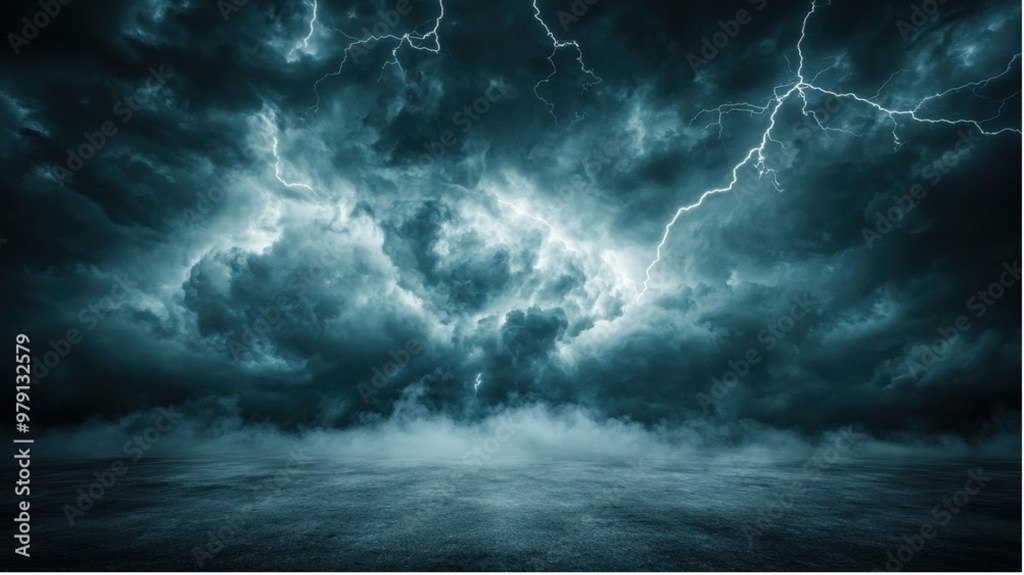
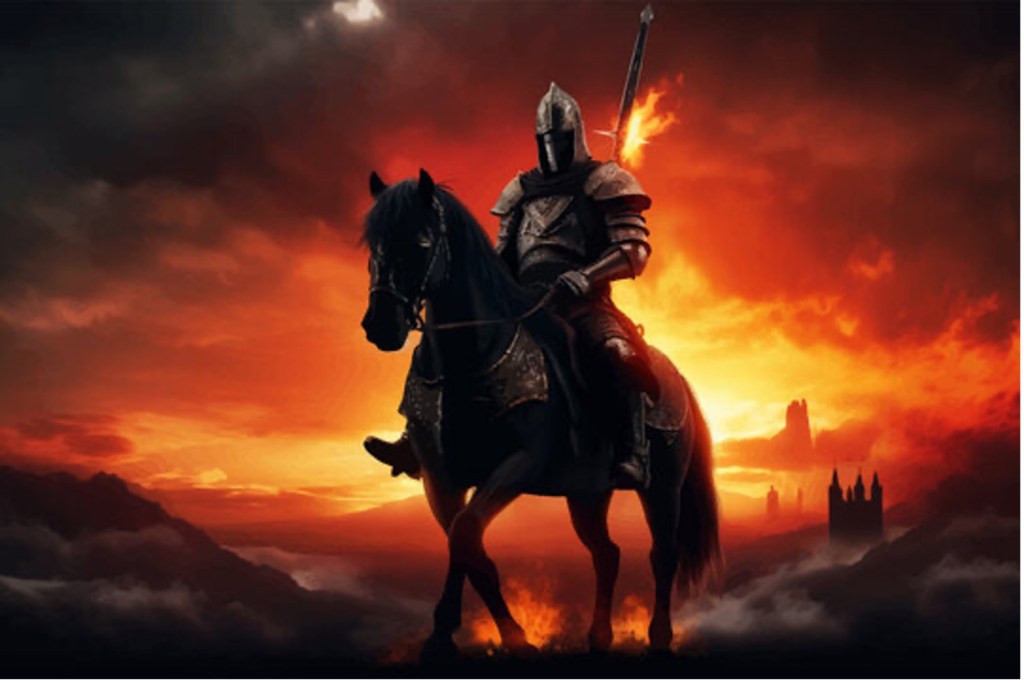
You shut your eyes. But there’s nowhere to hide. Your hands tremble, and you can barely feel your legs. Yet, you feel compelled to peek: the black clouds are taking on an ominous form. You blink in disbelief, but there he is: a black giant knight stands before you, spurring his flaming steed, lightning flashing in his eyes, and looking down on you.
The locals call him El Mal Caçador – the Mean Hunter. Poets dubbed him as The Count Arnau!
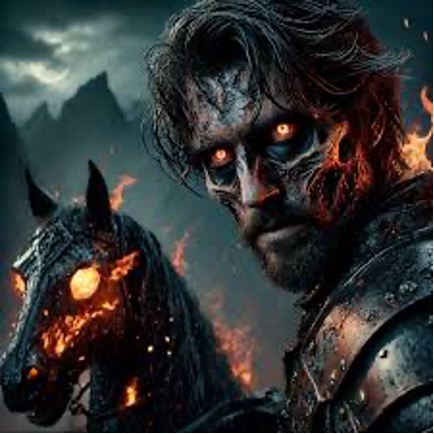
He’s portrayed as a fleshless spectre – much like a Tolkien Nazgul, or The Black Knight from the Arthurian legends, or even like the Ghost Rider – with two rings of fire instead of eyes, dressed in black, and galloping a steed made of flames.
They say that he was once a man of noble birth – a valiant knight. Some say that he was cursed by the heavens for his heretical offences, others that he bargained immortality with the Devil. In stormy nights, the Count Arnau, El Mal Caçador, is the terror that makes common folk poop their pants. He’s also the inspiration behind the poets’ epic songs.
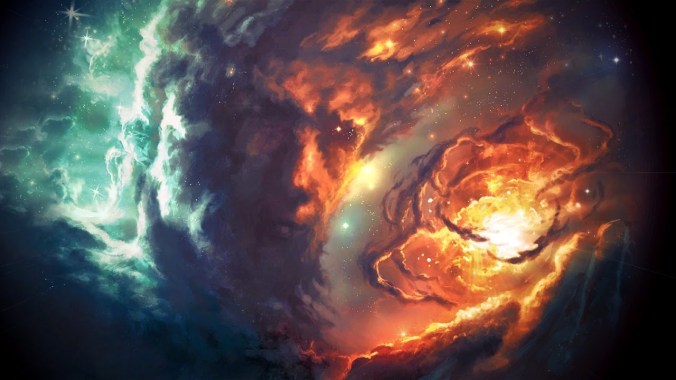
But who was he, really? A legendary knight or an ominous myth?
The Count Arnau: The Christian Champion
In search for an epic foundational figure, some Catalans have seen in the legendary deeds of Count Arnau the bedrock of the Catalan nation. From this perspective he was a feudal lord, the Christian champion that brought doom and havoc on the Muslim armies invading the Iberian Peninsula.
One legend tells that an army of Moors tried to conquer the lands of the count – El Castell de Mogrony – near Girona. The Christians were outnumbered and had no hope of victory. But the count Arnau was not of the surrendering type.
He gathered a few brave men to follow his lead. At first, the Moors thought they were cowardly fleeing. Far from it. Arnau ascended to the top of mount Mogrony, raised his sword, spurred his steed and looked down on the Muslim soldiers, challenging them to come after him.
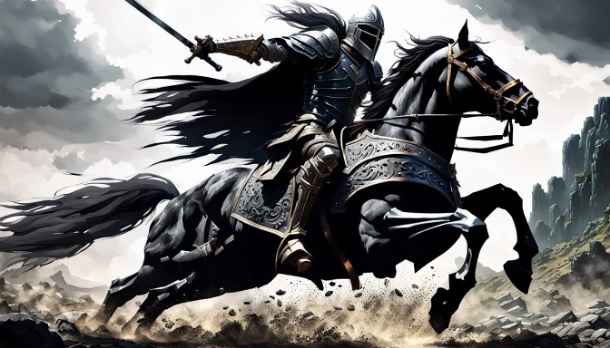
The Moorish troops couldn’t tolerate such an act of defiance and set out to give the haughty knight a lesson. Turns out, Arnau not only had a strategic advantage: he also displayed great dexterity with the sword, slaying anyone coming near him.
Obsessed with defeating the Christian knight, the Moors lost sight of Arnau’s little battalion, which assaulted the neglected Muslim camp and attacked the dwindling Moorish troops from their blind spot.
In no time, the remaining Moors had no choice but to surrender. The Christian victory reverberated throughout Catalonia and empowered the Christian troops to face their own battles with renewed courage and vanquish the Muslim armies.
The Count Arnau: The Sinner
It was also said that he was a man with no fear of God. At least, he didn’t hold anything back in his offences. Arnau was reputed with using his charm and power to seduce young nuns, and women of virtue. They say that he fell in love with the abbess of Sant Amanç, with whom they kept a long-lasting affair.
He was also accused of dealing with all sorts of demonic creatures. Apparently, in Arnau’s land, there’s a deep hole – El Pou de Mogrony – so dark and deep that no one dares to discover where it leads. It was said that through this hole, Arnau kept in touch with the Devil himself.
Because of Arnau’s debauchery and his disrespectful behaviour towards the Catholic Church, God struck him with a Zeus-style thunderbolt, and that would explain why the count is now a wandering fleshless spectre riding a horse in flames.
Others assert that Arnau fooled death by sneaking into the Garden of the Hesperides and stealing one of the treasured apples. This time not through El Pou de Mogrony, but through an alleged portal to the divine world, situated near the mouth of River Ter.
They say that on stormy nights Arnau, returns to earth in his spectral form, riding his flaming steed. Common folk claim that, in those stormy nights, one may hear the giggles, the moaning and the clinking and tossing of drinks, as if Arnau and the young nuns were still feasting in an eternal orgy.
So, Myth or Legend?
Arnau’s military prowess as a champion of Christianity and foundational figure of Catalan identity clearly positions him as a legendary hero. Besides, from the perspective of warrior’s courage and dexterity surely there were not one, but many knights with similar qualities. Then, oral tradition merged the stories of many valiant knights into the legend of the Count Arnau.
It is also probable that such a knight – a Christian hero during the day – also enjoyed celebrating his victories during the night with wine and women.
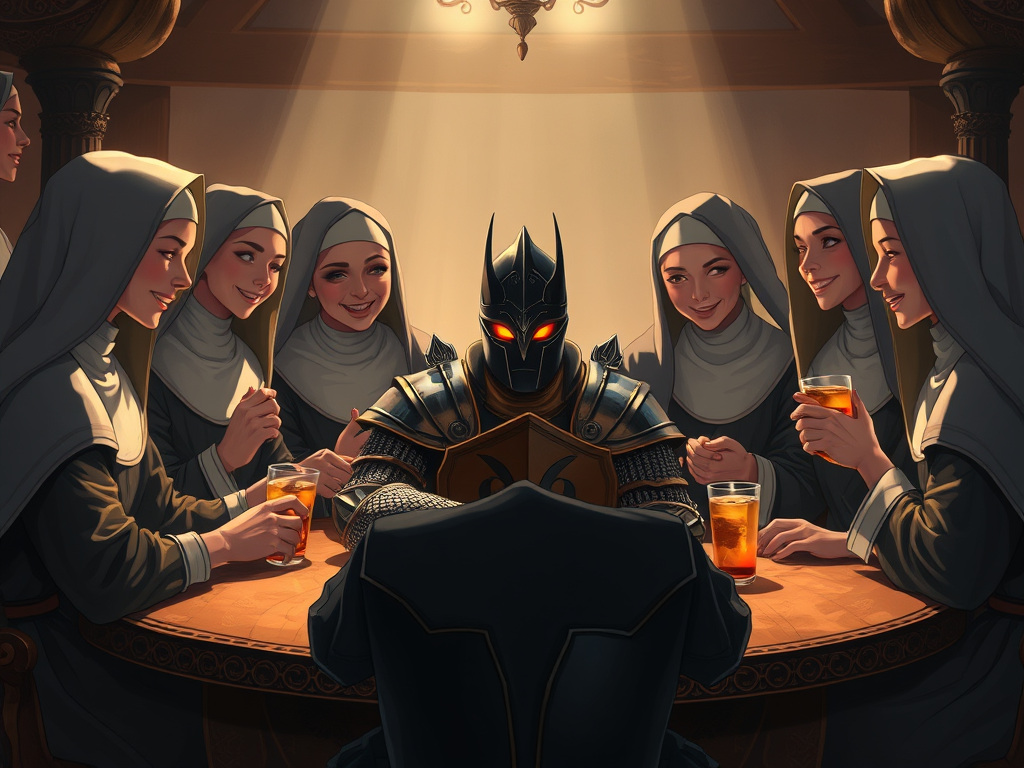
Surely the guardians of the Catholic faith didn’t approve that sort of behaviour and decided to vilify Arnau’s lustful encounters, dubbing them as dealings with the Devil. Here’s where Arnau’s legend gets its first supernatural sprinkle.
The myth starts taking shape when Arnau becomes immortal: either because God struck him with a lightning, or because he stole an apple from the Garden of the Hesperides, or because of his dealings with the Devil.
The case is that many accounts relate Arnau’s return as a fleshless spectre riding a flaming steed, with nights of violent weather. Here’s where the sinful Christian Knight and the force of nature called El Mal Caçador, become one and the same.
Black and bushy or white and fluffy, the clouds are playful. We all know they love entertaining the skies with fancy figures. Thunderbolt and lightning are no doubt daunting, and the storms are dangerous and have claimed the lives of many.
With just a touch of imagination, it’s not hard to see how all these elements fall in together to give birth to the real myth here: El Mal Caçador, the Black Knight spurring a horse of fire – the incarnation of the raging storm. Which has been around since the dawn of time, long before Count Arnau was even born.
The Catalan knight is no doubt a legend, whose most remarkable deed is giving his name and title to the Mean Hunter, thus merging himself with an eternal myth.
Now, it’s your turn: What’s your take in all this?
Drop your comments and share it away!

